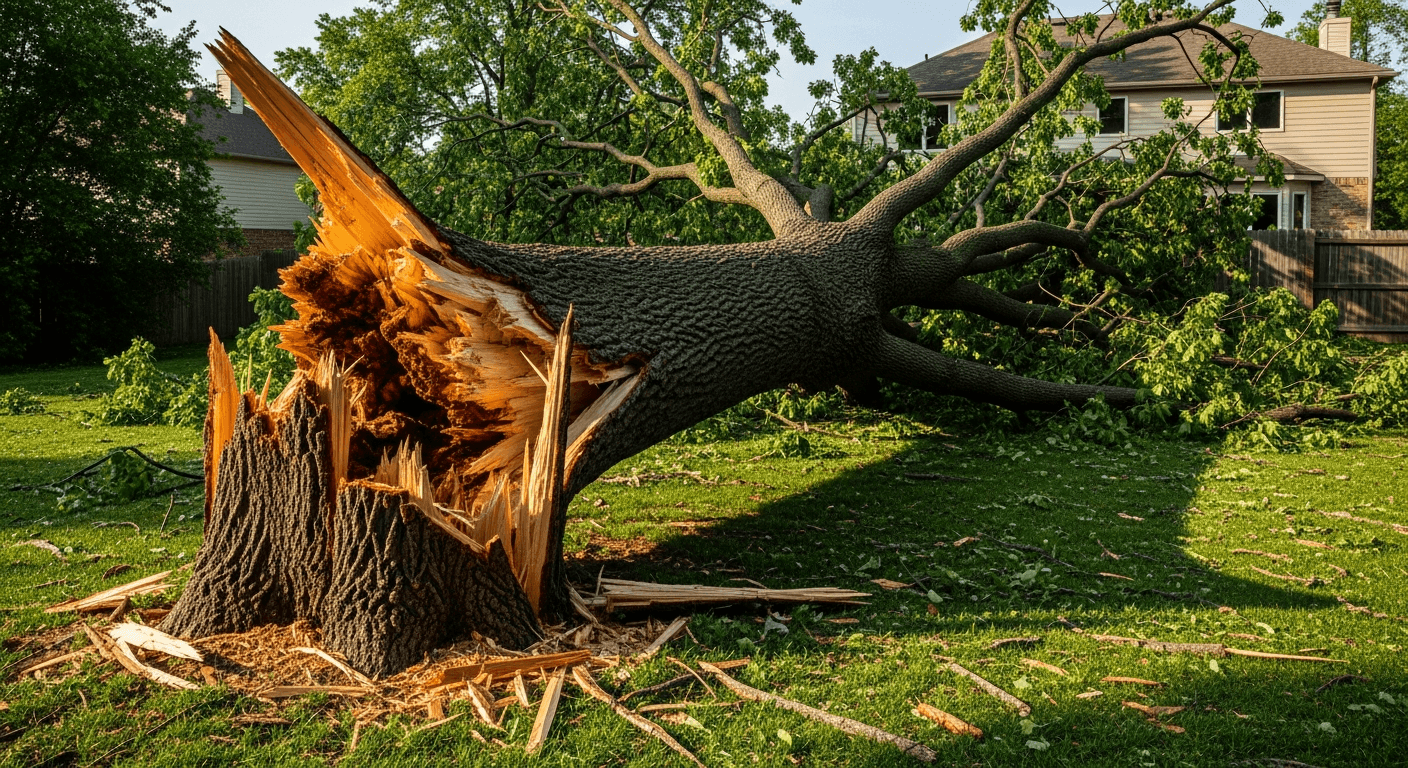
A storm rolls through, a root system gives way, or an old tree finally comes down in your yard. Your first instinct might be to call a removal service and pay $500 to $2,000 to haul it away. But that fallen tree could be worth far more than the cost of removing it.
A single mature hardwood tree can yield 200 to 500 board feet of lumber, worth anywhere from $200 to $2,000 or more depending on the species. White oak, black walnut, and cherry are especially valuable. Even common species like maple and poplar produce usable lumber for furniture, shelving, and construction projects.
Here is what to do, step by step.
1. Make Sure It's Safe
Before you do anything with a fallen tree, check for hazards:
- Power lines: If the tree is touching or near power lines, do not approach it. Call your utility company immediately. This is not optional.
- Structural damage: If the tree hit your house, garage, fence, or vehicle, document the damage with photos and contact your homeowners insurance. Most policies cover fallen tree removal when it damages a structure.
- Unstable position: A tree leaning on another tree or hung up on branches is under tension and can shift without warning. Leave it to a professional arborist.
- Root ball: A tipped root ball can be unstable. Keep your distance until a professional clears it.
Homeowners insurance typically covers fallen tree removal when the tree damages a covered structure (house, garage, fence). If the tree falls in your yard without hitting anything, removal is usually your responsibility. Either way, document everything with photos before any work begins.
2. Identify the Species
The species of your tree determines its value and what you can do with the lumber. Here is a quick guide to common species and their value:
| Species | Value | Best Uses |
|---|---|---|
| Black Walnut | High ($5-$15/bf) | Furniture, cabinetry, gun stocks |
| White Oak | High ($4-$10/bf) | Furniture, flooring, barrels, outdoor |
| Cherry | High ($4-$8/bf) | Furniture, cabinetry, trim |
| Hard Maple | Medium ($3-$7/bf) | Flooring, cutting boards, furniture |
| Red Oak | Medium ($3-$6/bf) | Furniture, flooring, cabinetry |
| Ash | Medium ($3-$5/bf) | Tool handles, flooring, furniture |
| Poplar/Tulip | Low ($2-$4/bf) | Paint-grade trim, shelving, crates |
| Pine | Low ($1-$3/bf) | Construction, shelving, paneling |
| Cedar | Medium ($3-$6/bf) | Decks, fences, closets (naturally rot-resistant) |
Not sure what species you have? Look at the leaves (if still attached), bark pattern, and wood color. Your local sawmill operator can usually identify it on sight.
3. Have It Milled Into Lumber
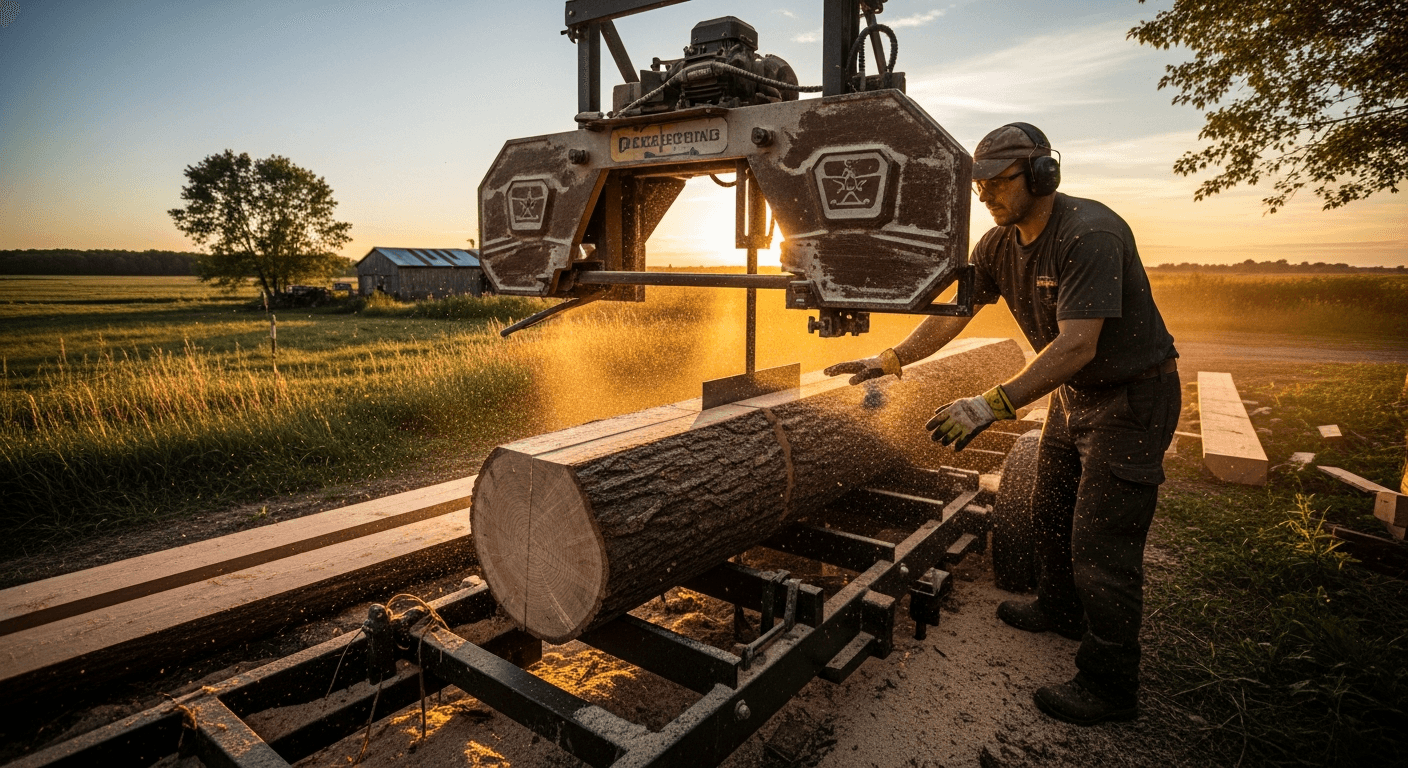
This is the highest-value option for most fallen trees. A portable sawmill operator comes to your property with a mobile band mill, cuts your logs into boards on site, and you keep the lumber. No hauling required.
What a portable sawmill operator does
- Brings a trailer-mounted band mill to your property
- Cuts logs into boards at the dimensions you specify (1-inch boards, 2-inch slabs, live edge, etc.)
- Most operators can handle logs 20 inches to 36 inches in diameter
- A typical session takes 2 to 6 hours depending on log count and size
What it costs
Portable sawmill services typically charge one of two ways:
- Per board foot: $0.25 to $0.75/bf for softwoods, $0.35 to $1.00/bf for hardwoods
- Hourly rate: $65 to $150/hour, including setup and travel
- Minimum charge: Most operators have a $100 to $250 minimum
For a single large tree yielding 300 board feet of red oak, expect to pay $150 to $300 for milling. The resulting lumber could be worth $900 to $1,800 at retail prices.
Search our directory for sawmills and portable milling services in your state. Filter by city to find operators near you who can come to your property.
How to prepare your logs
- Clear the area: The sawmill needs a flat, open space roughly 20 feet by 40 feet near the logs
- Remove branches: Limb the trunk so the sawyer has clean logs to work with
- Check for metal: Nails, screws, fence wire, and old hardware embedded in the tree will destroy saw blades. Mention any you know about.
- Cut to length: If you can safely buck the trunk into 8 to 12 foot sections, do it. If not, most operators can handle this.
- Act quickly: Fresh-cut logs are easier to mill. Logs left on the ground for months can develop staining, insect damage, and checking (cracks). Ideal timing is within 2 to 4 weeks of the tree falling.
4. Take Your Logs to a Local Sawmill
If you can transport the logs, taking them to a stationary sawmill is another option. Stationary mills often have larger equipment, kiln drying services, and can produce a wider range of cuts. This is a better choice if you need precision lumber or kiln-dried boards for indoor furniture.
Expect similar per-board-foot pricing, though some mills will offer a lumber-share arrangement: they mill your logs for free and keep a percentage of the lumber (typically 40% to 50%). This can be a good deal if you do not need all the boards.
5. Cut Live Edge Slabs
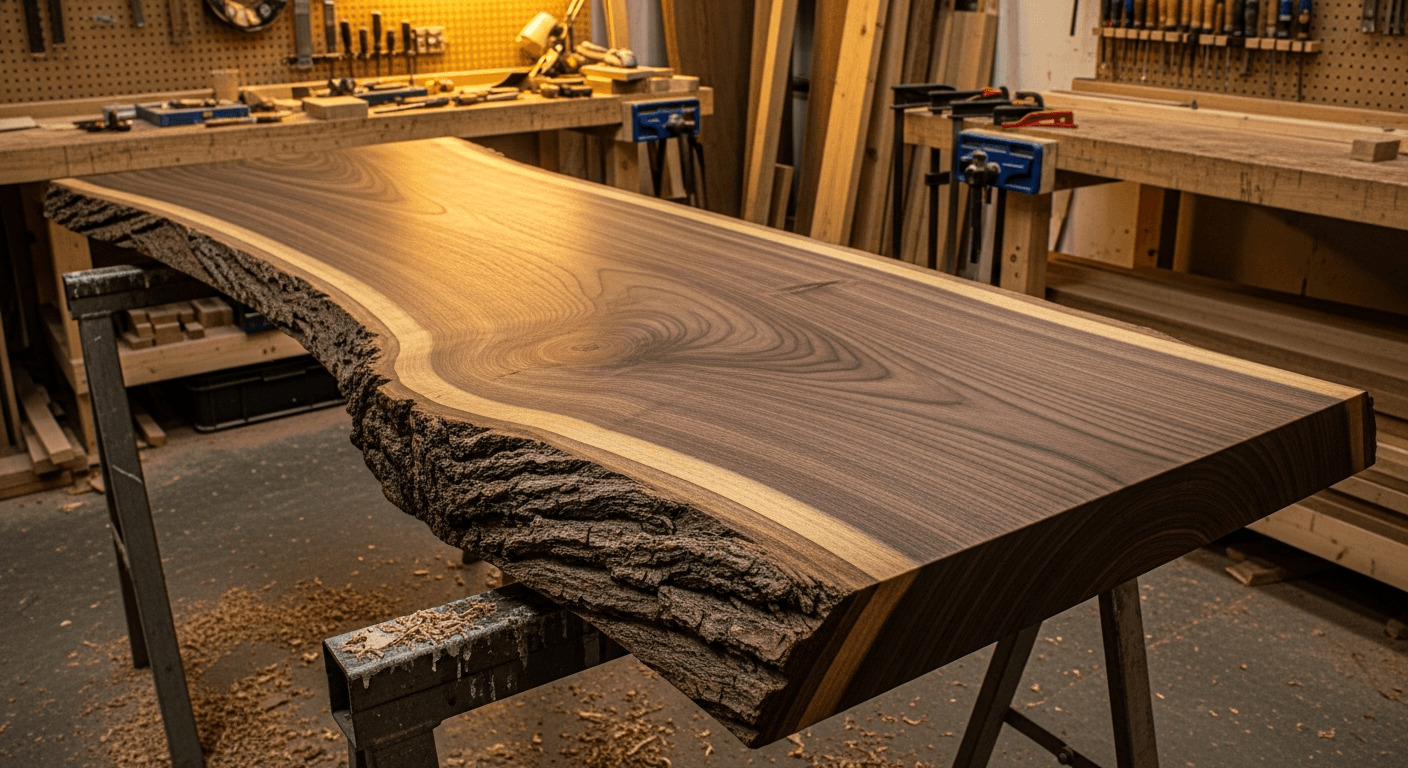
Live edge slabs, boards cut to preserve the natural edge of the tree, are one of the most valuable products you can get from a fallen tree. A single 8-foot walnut slab can sell for $300 to $1,500 depending on width, figure, and drying.
If your tree is 18 inches or wider in diameter, ask your sawmill operator about cutting slabs. They will typically cut 2-inch to 3-inch thick slabs through the center of the log to maximize width and preserve the natural bark edge.
Live edge slabs are popular for dining tables, coffee tables, desks, bar tops, and mantels. Even if you do not plan to use them yourself, dried slabs sell well to local woodworkers and furniture makers.
6. Use It for Firewood
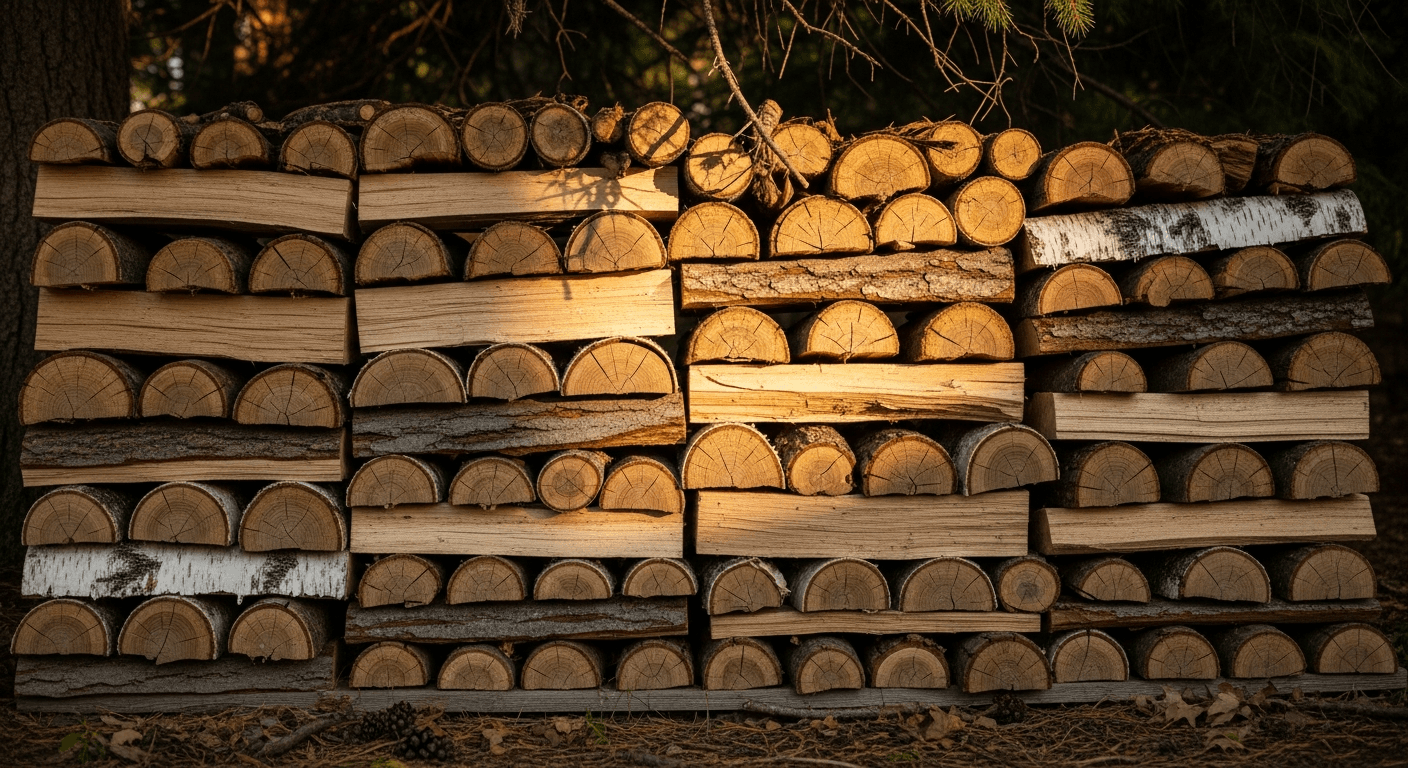
Not every fallen tree is worth milling. Small diameter trees (under 10 inches), heavily decayed trunks, and species with little lumber value (like silver maple or box elder) are better suited for firewood.
A cord of seasoned firewood sells for $200 to $400 depending on your region and the species. Hardwoods like oak, hickory, and ash burn longer and hotter than softwoods. A single large tree can yield 1 to 3 cords.
Split and stack the wood with spacers (stickers) between layers for airflow. Most firewood needs 6 to 12 months to season before burning. Cover the top but leave the sides open for ventilation.
7. Other Uses for a Fallen Tree
Garden and landscape features
- Slice the trunk into 3-inch rounds for a natural garden path
- Use a large section as a garden bench or seat
- Create raised bed borders from small-diameter logs
- Chip branches into mulch (many tree services will do this on site)
Woodworking projects
- Turning blanks for bowls, pens, and spindle work
- Carving blanks for sculpture or chainsaw art
- Rustic furniture (benches, shelves, coat racks)
- Cutting boards and serving boards from dense hardwoods
Sell the logs
Some sawmills buy logs directly, especially high-value species like walnut, cherry, and white oak. Prices vary by region, species, and log quality, but expect $100 to $500 per thousand board feet for common species, and significantly more for premium hardwoods. Contact local sawmills through our directory to ask about log buying.
8. How to Store Lumber After Milling
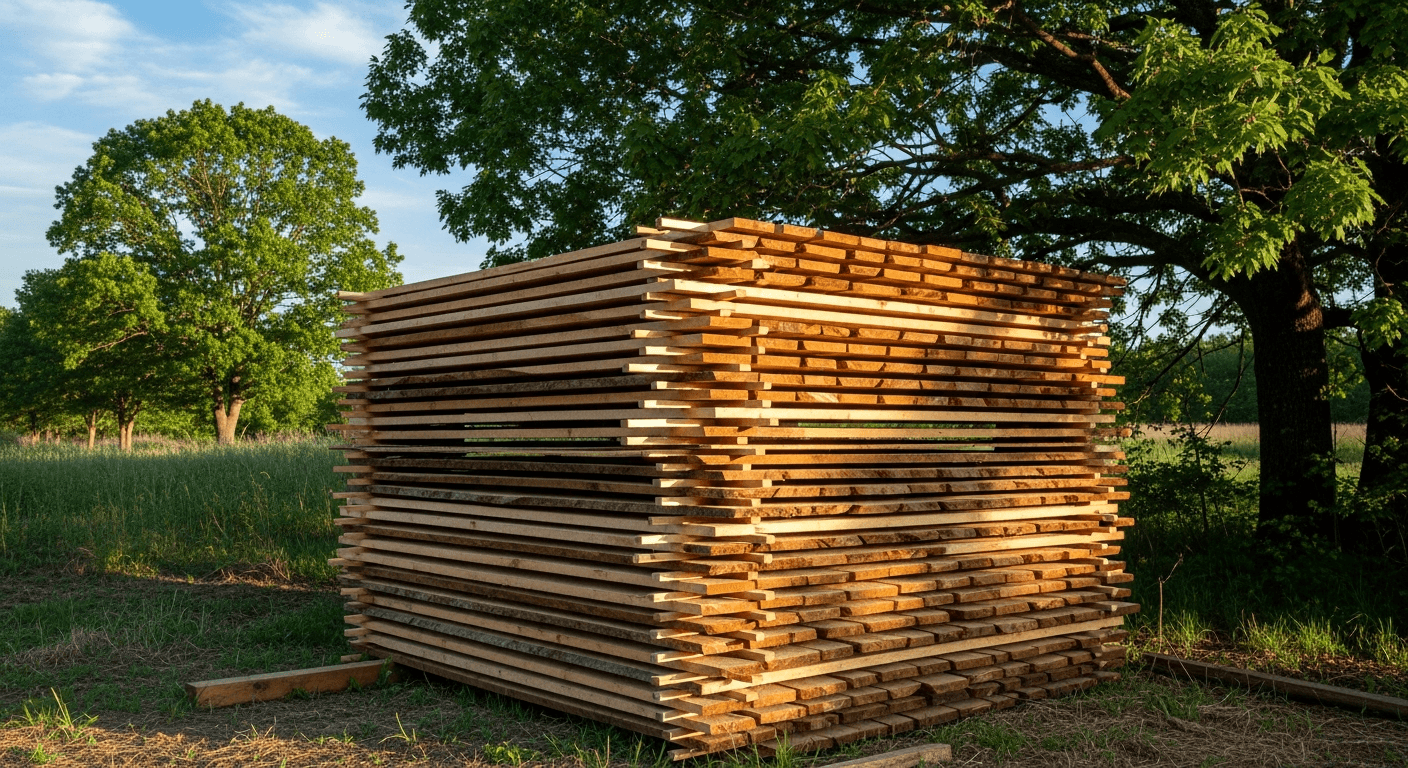
Once your tree is milled into boards, proper storage is essential. Freshly milled (green) lumber contains 30% to 80% moisture and needs to dry before use.
- Sticker the boards: Stack lumber with 3/4-inch spacers (stickers) between each layer, aligned vertically. This allows airflow on all surfaces.
- Elevate off the ground: Keep the bottom of the stack at least 6 inches off the ground on concrete blocks or treated lumber.
- Cover the top: Use a tarp or metal roofing to keep rain off. Leave the sides open for ventilation.
- Weight the top: Place heavy weights (concrete blocks, additional lumber) on top to reduce warping as the boards dry.
- Drying time: As a rule of thumb, air drying takes about one year per inch of board thickness. A 1-inch board takes roughly 6 to 12 months. A 2-inch slab takes 1 to 2 years.
For indoor furniture projects, you will want the moisture content below 8%. Air drying alone gets you to 12% to 15%. For the final step, many sawmills offer kiln drying services that bring moisture down to 6% to 8% in a matter of days.
Frequently Asked Questions
Is a fallen tree covered by homeowners insurance?
Generally yes, if the tree damages a covered structure (your house, garage, fence, or shed). If it falls in an open area without hitting anything, removal is typically not covered. Check your specific policy or call your insurance agent.
How much is a fallen tree worth?
It depends on the species, size, and condition. A large black walnut could yield $1,000 to $3,000 in lumber value. A 20-inch red oak might produce $500 to $1,200 worth of boards. Even a pine tree yields usable construction lumber worth $100 to $300.
How long can a fallen tree sit before milling?
Ideally, mill it within 2 to 4 weeks. After that, you risk staining (especially in warm weather), insect damage, and checking. In cool or cold weather, you have more time: logs can sit for several months over winter without significant degradation.
Can any tree be milled into lumber?
Most trees with a trunk diameter of 10 inches or more can be milled. Smaller trees do not yield enough usable lumber to justify the cost. Heavily decayed, hollow, or twisted trunks may not produce quality boards. Your sawmill operator can assess the log before cutting.
Do I need a permit to mill a tree on my property?
In most cases, no. If the tree is already down on your property, you can mill it for personal use without a permit. However, some municipalities have tree ordinances that apply to live tree removal, and commercial timber operations may require permits. Check with your local government if you plan to sell the lumber.
Next Steps
A fallen tree is not a problem to solve. It is a resource to use. Whether you mill it into lumber, cut live edge slabs, split it for firewood, or sell the logs, the tree that just fell in your yard has real value.
The first step is finding a local sawmill or portable milling service. Search our directory to find operators near you who can turn your fallen tree into something lasting.