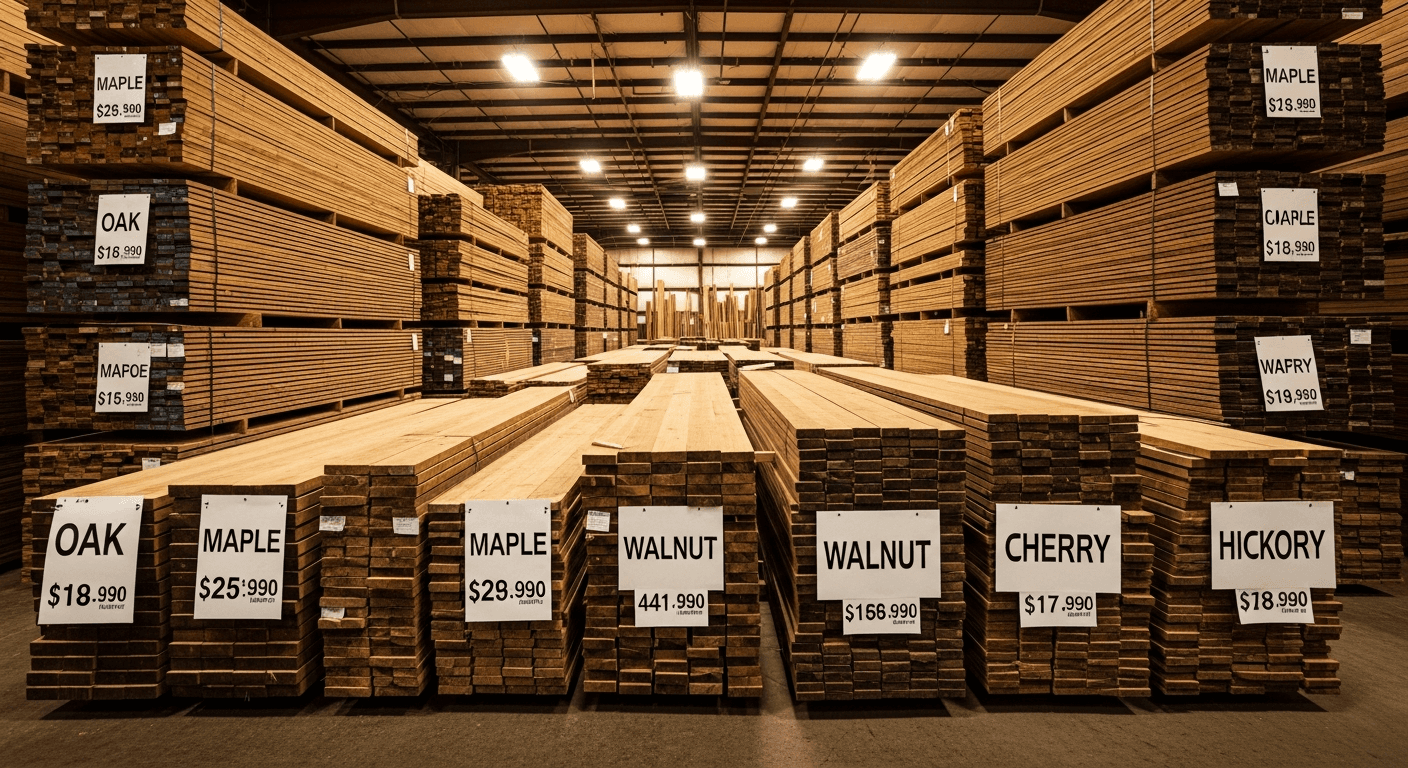
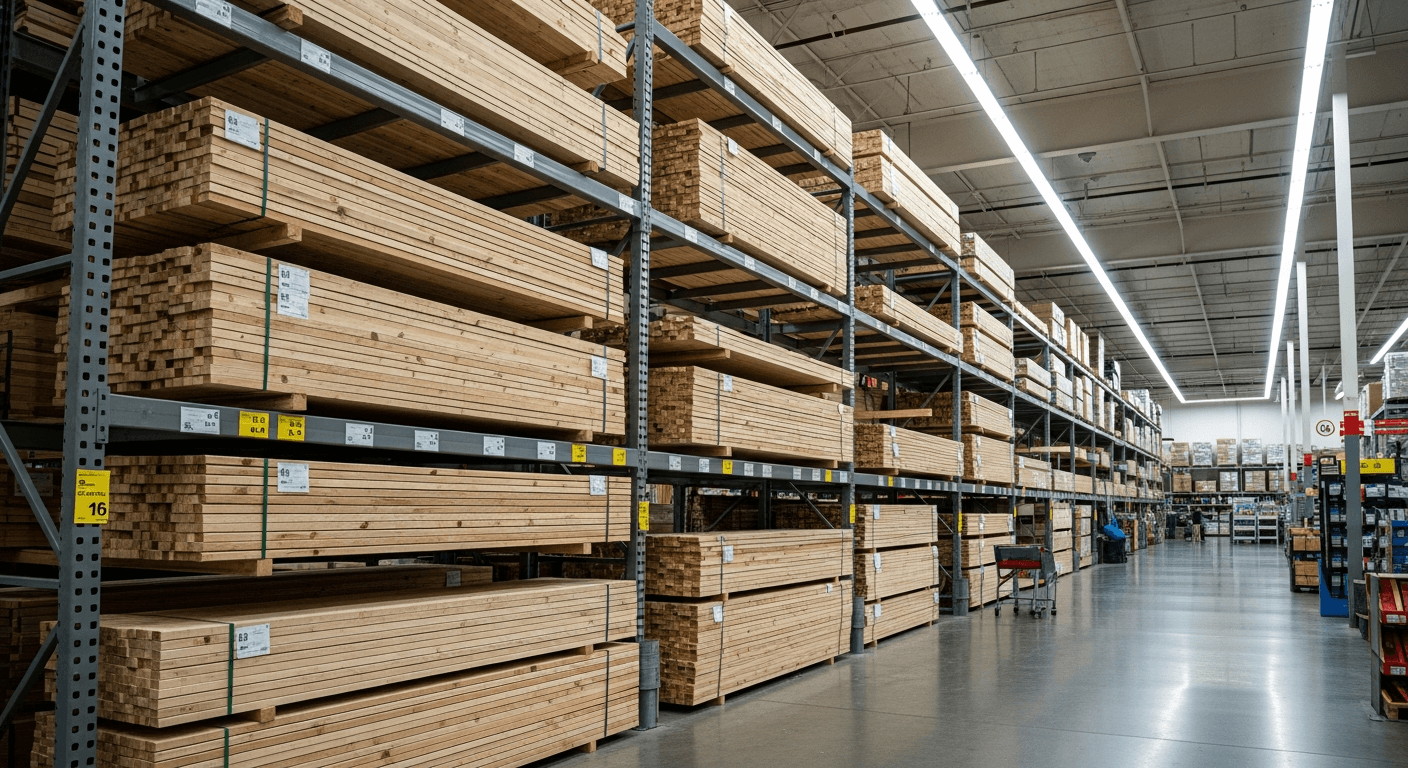
Most people buy lumber at Home Depot, Lowe's, or their local big box store because that is what they know. It is convenient, predictable, and right down the road. But for many projects, buying from a local sawmill is cheaper, higher quality, and gives you access to species and cuts you will never find in a big box aisle.
Here is a direct comparison to help you decide which source makes sense for your next project.
Price Comparison
This is where the biggest differences show up, and they depend entirely on what you are buying.
Commodity softwoods (2x4s, 2x6s, construction lumber)
For standard dimensional lumber (SPF: spruce, pine, fir), big box stores are usually competitive or cheaper. They buy in massive volume from industrial mills and can price aggressively.
| Product | Home Depot / Lowe's | Local Sawmill |
|---|---|---|
| 2x4x8 (SPF, kiln dried) | $3 - $6 | $3 - $5 (rough sawn) |
| 2x6x8 (SPF) | $5 - $9 | $5 - $8 (rough sawn) |
| 2x10x12 (SPF) | $14 - $22 | $12 - $18 (rough sawn) |
Verdict: For small quantities of construction lumber, big box stores win on convenience. Sawmill prices are similar but the wood is often rough sawn (not planed), which is fine for framing but needs surfacing for finish work.
Hardwoods (oak, maple, walnut, cherry)
This is where sawmills pull away dramatically.
| Species | Home Depot / Lowe's (per bf) | Local Sawmill (per bf) | Savings |
|---|---|---|---|
| Red Oak (4/4) | $8 - $14 | $3 - $6 | 50-70% |
| Hard Maple (4/4) | $9 - $15 | $3 - $7 | 50-70% |
| Black Walnut (4/4) | $14 - $24 | $6 - $12 | 50-60% |
| Cherry (4/4) | $10 - $18 | $4 - $8 | 50-65% |
| Poplar (4/4) | $5 - $10 | $2 - $4 | 50-60% |
Verdict: For any hardwood project (furniture, cabinetry, cutting boards, shelving), a local sawmill saves you 50% to 70%. The savings add up fast. A dining table project using 40 board feet of walnut could cost $560 to $960 at Home Depot versus $240 to $480 from a sawmill.
Specialty products
| Product | Home Depot | Local Sawmill |
|---|---|---|
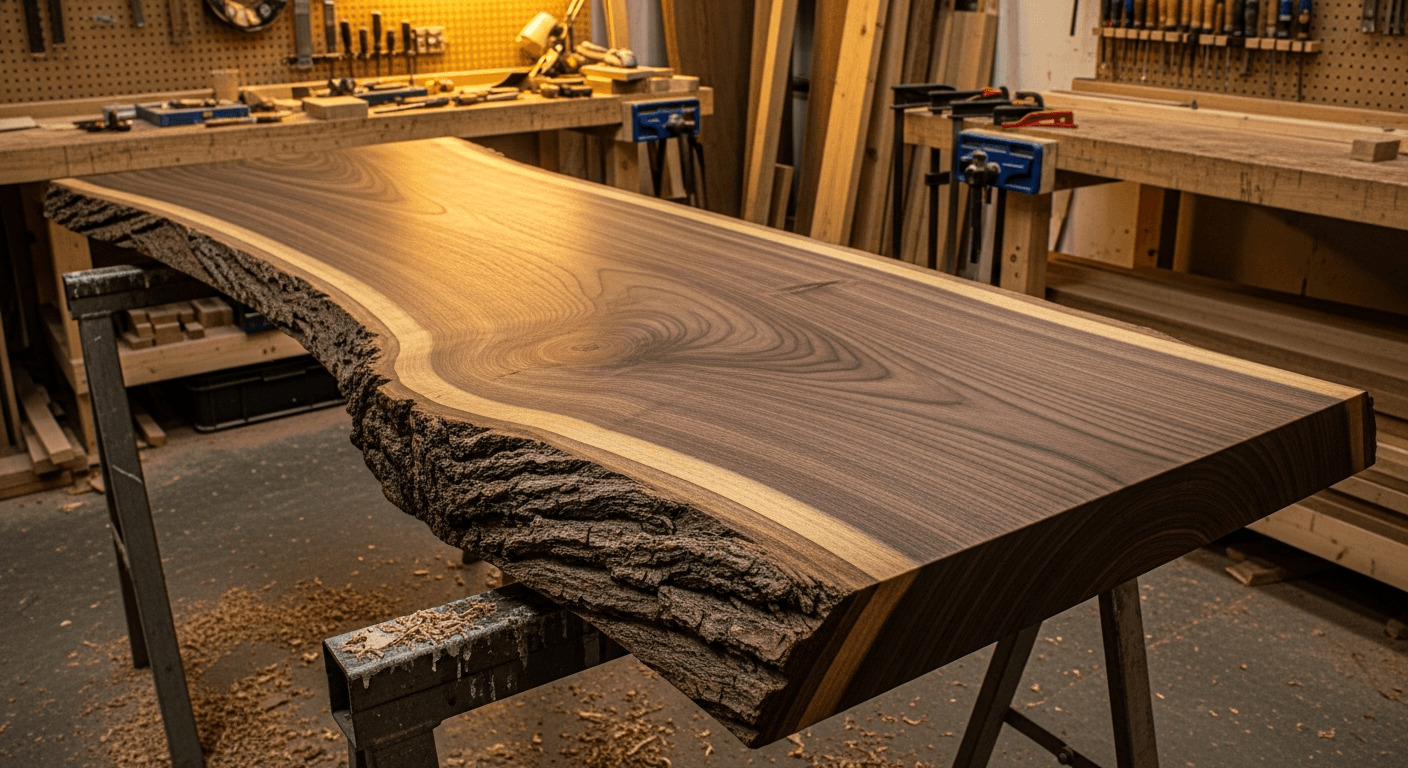
| Live edge slabs | Not available | $5 - $25/bf |
| Wide boards (12"+) | Rarely available | Common |
| Quarter sawn lumber | Not available | Available (premium) |
| Thick stock (8/4, 12/4) | Limited selection | Cut to order |
| Local/regional species | Not available | Often available |
| Reclaimed/urban wood | Not available | Some mills specialize |
Verdict: If you want anything beyond standard dimensional lumber, a sawmill is your only real option. Live edge slabs, wide boards, thick stock, and quarter sawn lumber simply do not exist at Home Depot.
Quality Comparison
Big box store lumber
- Mass-produced from fast-growth plantation trees
- Often warped, twisted, or cupped (pick through the pile carefully)
- Kiln dried and surfaced (S4S), ready to use
- Limited to common grades and standard dimensions
- Hardwood selection is typically a small rack of red oak, poplar, and maybe maple
- Quality varies significantly from board to board
Local sawmill lumber
- Often from mature, slow-growth trees with tighter grain
- Usually rough sawn (you or a shop need to surface it)
- May be air dried or kiln dried depending on the mill
- Available in any thickness, width, or length the log allows
- You can inspect the actual boards before buying
- Many mills let you select specific boards from the stack
- The operator can tell you exactly where the tree grew and when it was cut
Sawmill lumber is typically rough sawn, meaning the surfaces are textured from the saw blade and not planed smooth. For construction projects (framing, fencing, outbuildings), this is fine as is. For furniture and cabinetry, you will need to run the boards through a planer or jointer, or ask the mill if they offer surfacing services. Many do, for $0.25 to $0.75/bf extra. Even with surfacing added, sawmill lumber is still cheaper than big box hardwood.
Selection and Availability
| Factor | Home Depot / Lowe's | Local Sawmill |
|---|---|---|
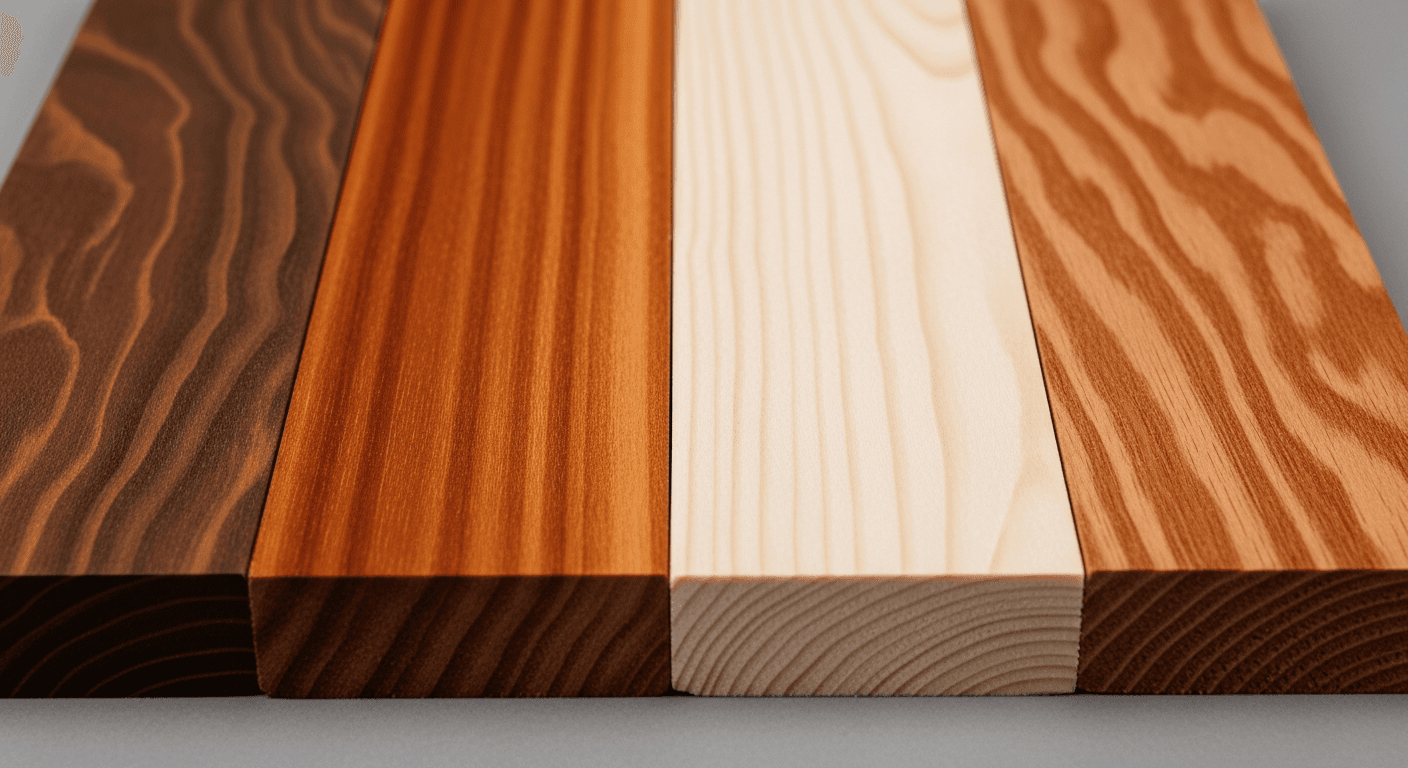
| Softwood species | 2-3 (SPF, cedar, treated) | 5-10+ (regional species) |
| Hardwood species | 2-4 (oak, poplar, maple) | 8-20+ (whatever grows locally) |
| Thickness options | 3/4", 1.5" (limited) | Any thickness from 1/2" to 4"+ |
| Width options | Up to 12" (standard) | As wide as the log allows |
| Length options | 6', 8', 10', 12' (standard) | Custom lengths available |
| Instant availability | Yes (walk in and buy) | Depends on inventory |
| Custom orders | No | Yes (cut to your specs) |
Convenience
This is where big box stores have a genuine advantage. They are open 7 days a week, everything is labeled and priced, and you can be in and out in 20 minutes. No phone calls, no appointments, no minimum orders.
Sawmills require more effort. You may need to call ahead, drive further, and know what you want before you arrive. Some mills are open limited hours or by appointment only. But many woodworkers find this is part of the appeal: you build a relationship with the miller, learn about your wood, and get exactly what you need.
When to Buy from a Sawmill
- Furniture and cabinetry projects where wood quality and species matter
- Any hardwood purchase over 10 board feet (the savings compound)
- Live edge tables, mantels, or bar tops (only available from mills)
- Wide or thick boards that big box stores do not carry
- Local or unusual species (mesquite, osage orange, local cedar)
- Bulk orders for fencing, siding, or barn projects
- When you want to know the source of your wood
When to Buy from Home Depot
- Small quantities of construction lumber (a few 2x4s for a weekend project)
- Pressure treated lumber for ground contact (most sawmills do not treat wood)
- Plywood and sheet goods (sawmills do not sell these)
- Pre-finished or specialty products (trim, molding, pre-primed boards)
- Same-day emergency needs (broken fence rail, quick repair)
The Bottom Line
Home Depot and Lowe's are convenient, predictable, and competitive for commodity softwoods and sheet goods. For everything else, especially hardwoods, specialty cuts, and any project where wood quality matters, a local sawmill saves you money and gives you access to better lumber.
The best approach for most woodworkers and homeowners is to use both. Big box stores for quick-grab construction lumber and hardware. Local sawmills for the wood that will be seen and touched in your finished project.
Find a Local Sawmill
Ready to skip the big box store for your next hardwood purchase? Search our directory of 2,600+ sawmills, lumber yards, and milling services across all 50 states.